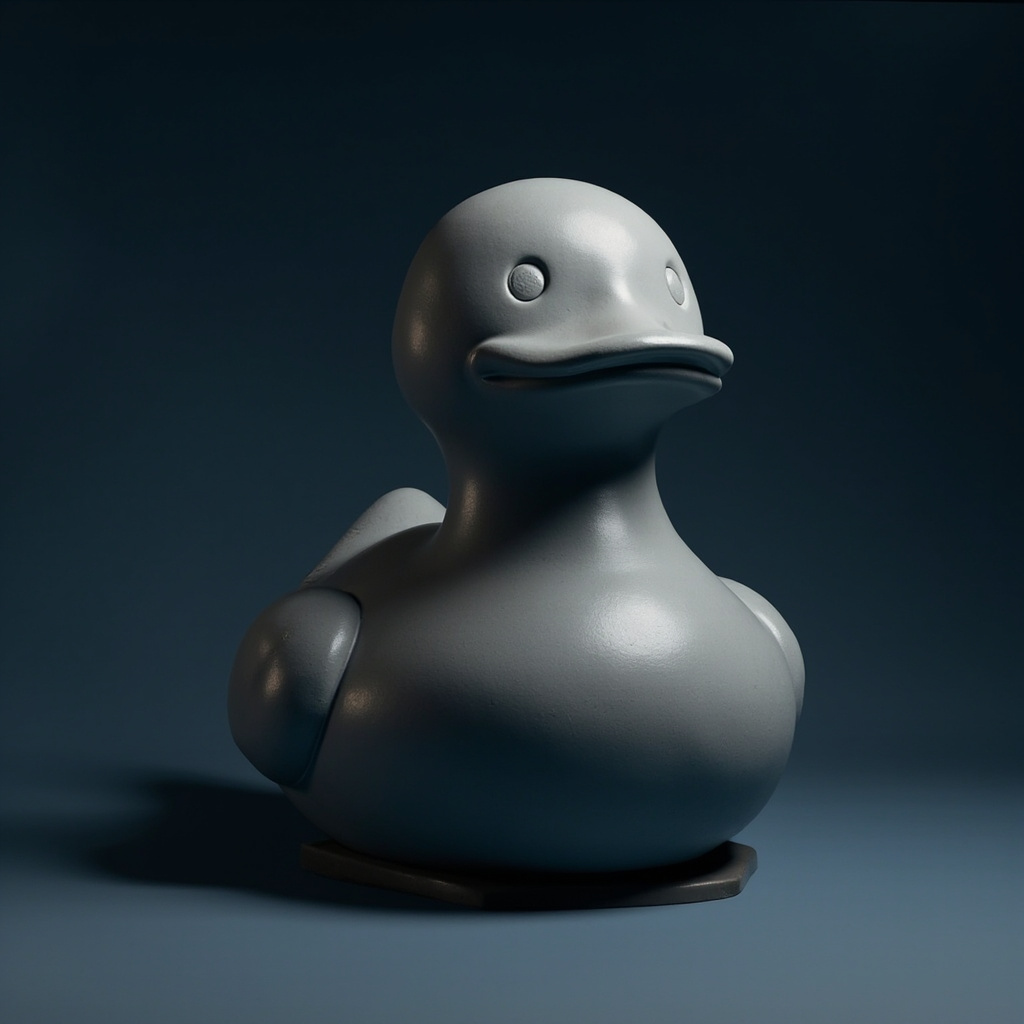
Material
Single-piece cast from vulcanized rubber. Food-grade silicone compound for Micro and Classic, natural rubber with EPDM additives for Designer, Mega, and Architect. No plastic inserts, no metal inside, no glued seams.
We make ducks you'd rather put on a shelf than set in water.
Read the journalSmall ones — in your pocket.
Big ones — in the lobby.
All of them — in the frame.
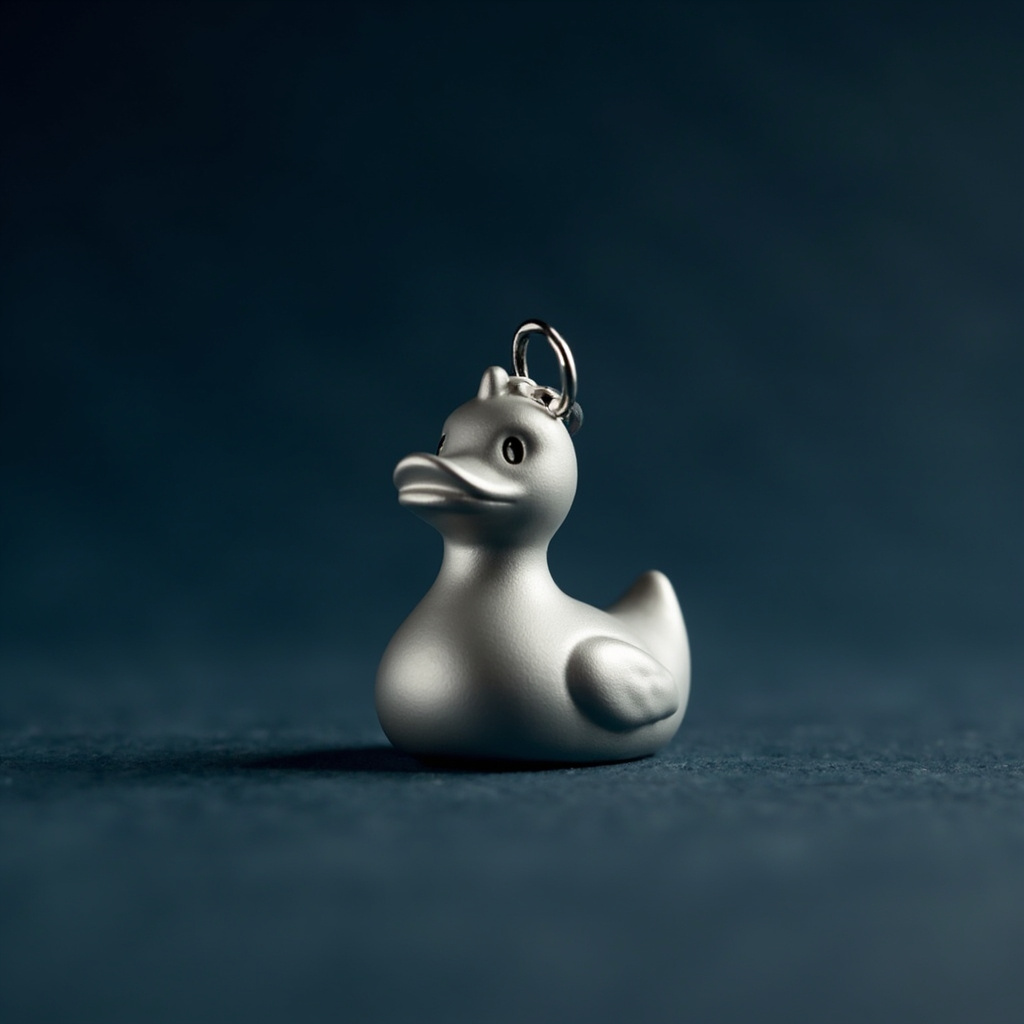
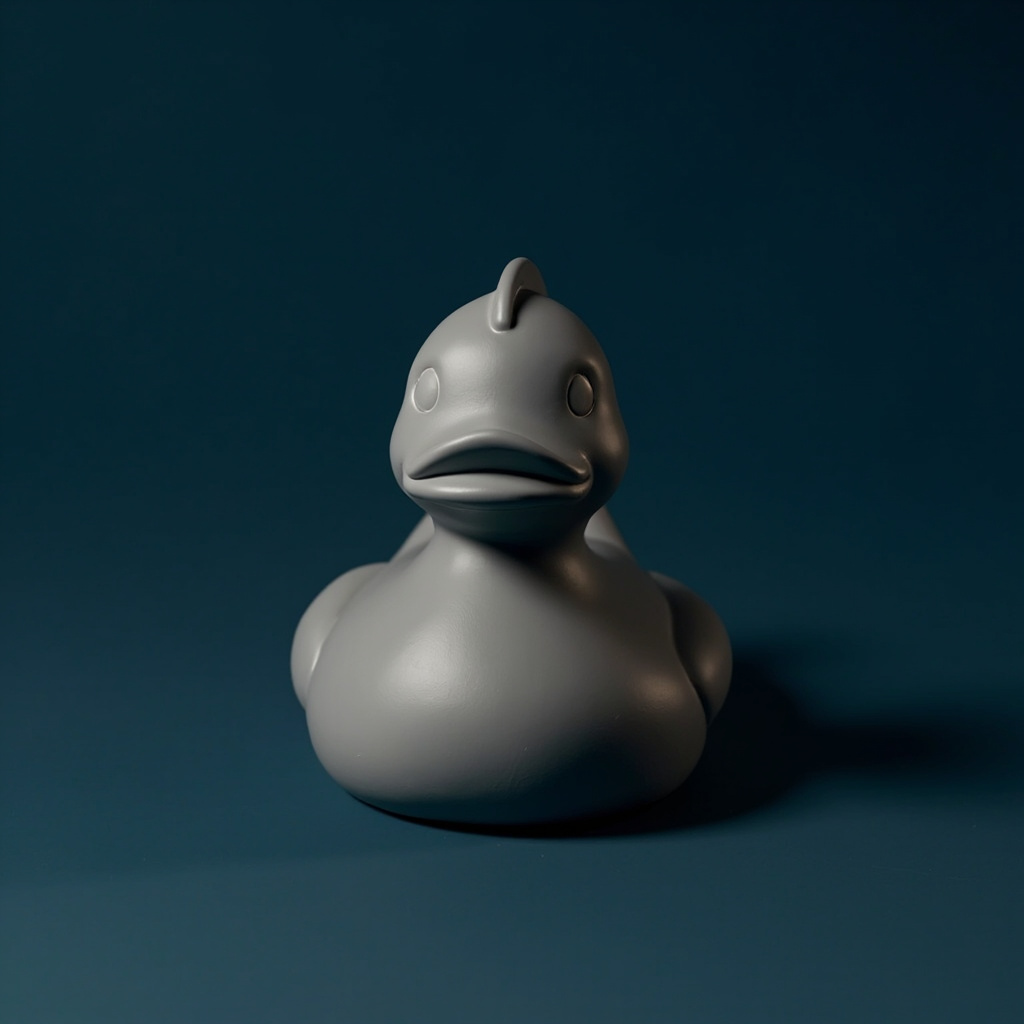
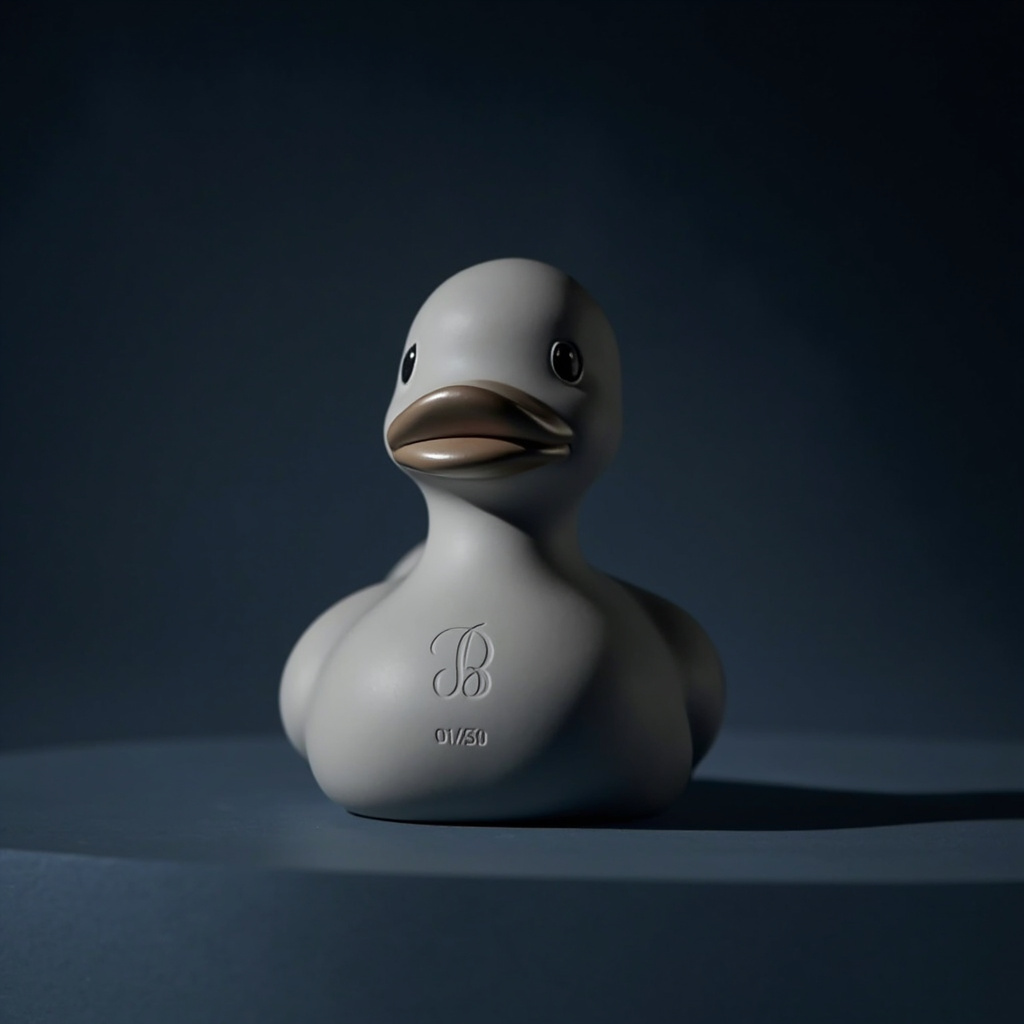
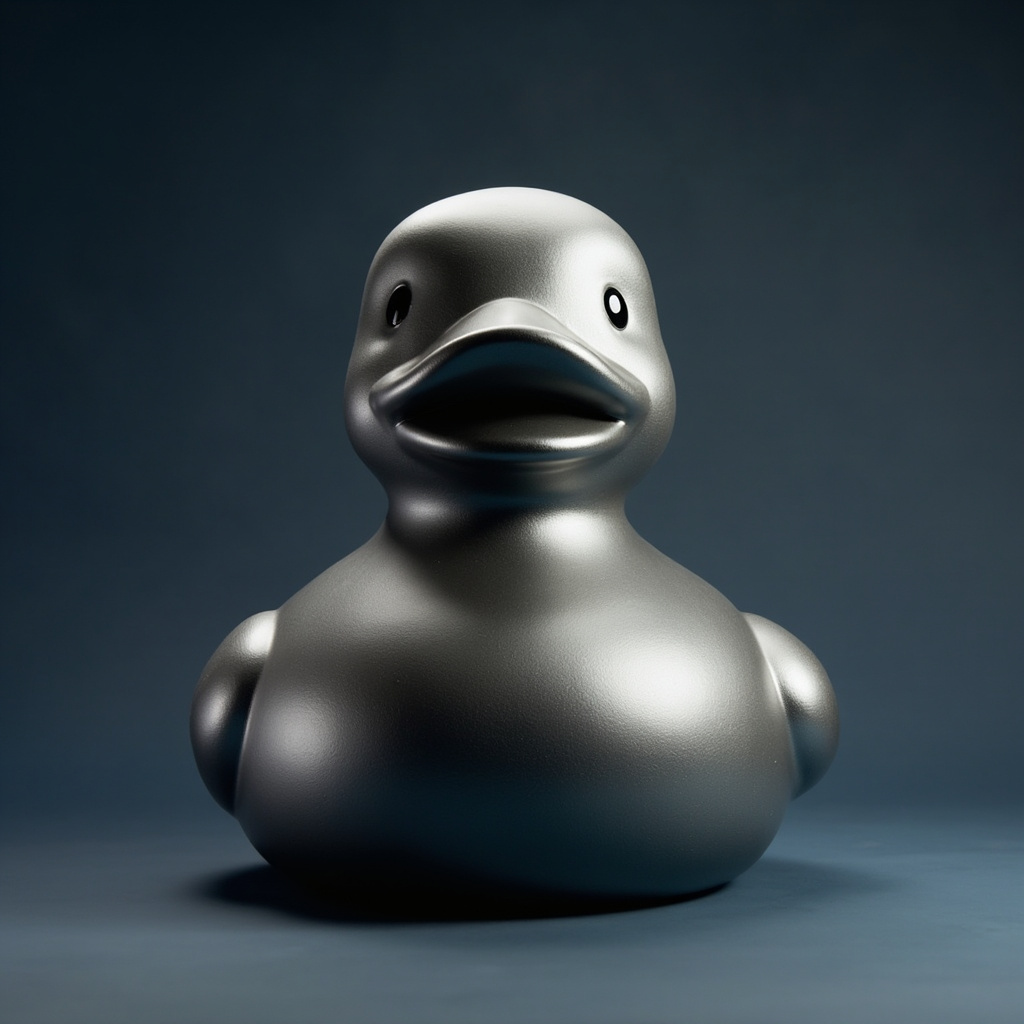
Five lines. One silhouette. Proportions don't scale linearly — the Architect should look like the same duck as the Micro.
A complete rundown of our production — for those who want to understand exactly what sits on the shelf.
Single-piece cast from vulcanized rubber. Food-grade silicone compound for Micro and Classic, natural rubber with EPDM additives for Designer, Mega, and Architect. No plastic inserts, no metal inside, no glued seams.
Eyes are paint, not inserts. The black pupil and white sclera are hand-applied with food-grade silicone pigment after vulcanization. UV- and water-resistant. Eye shape uses a single mold relief across all SKUs.
Micro — injection molding under pressure, 45 seconds per cycle. Classic — compression, 3 minutes. Designer — hand-molded in a silicone flask. Mega — rotational molding with an internal frame. Architect — sculptural casting from a CNC polystyrene master model.
Five checks per duck: visual inspection, geometry within ±2% tolerance, a one-meter drop test, odor test, and gravimetry ±3%. The Architect goes through an extended protocol with ultrasonic inspection of the frame's welded seams.
GOST 25779-83, EN 71-3 for chemical migration, REACH — no phthalates or bisphenol A. Age marking is required: Micro 4 cm — 6+, Classic — 3+, Designer — 6+, Mega — decorative object, Architect — installation requiring certified mounting.
Temperature range: −20 °C … +60 °C. Indoor use only. Protect from direct UV and from oils and solvents. Wash with warm water and mild soap. Do not use abrasives, alcohols, or bleach. A product passport is included in every box.
Twelve signature Pantone equivalents. The pigment runs through the body of the duck — coloring happens BEFORE casting, not as a surface paint. Lead times and pricing are predictable; durability is guaranteed.